
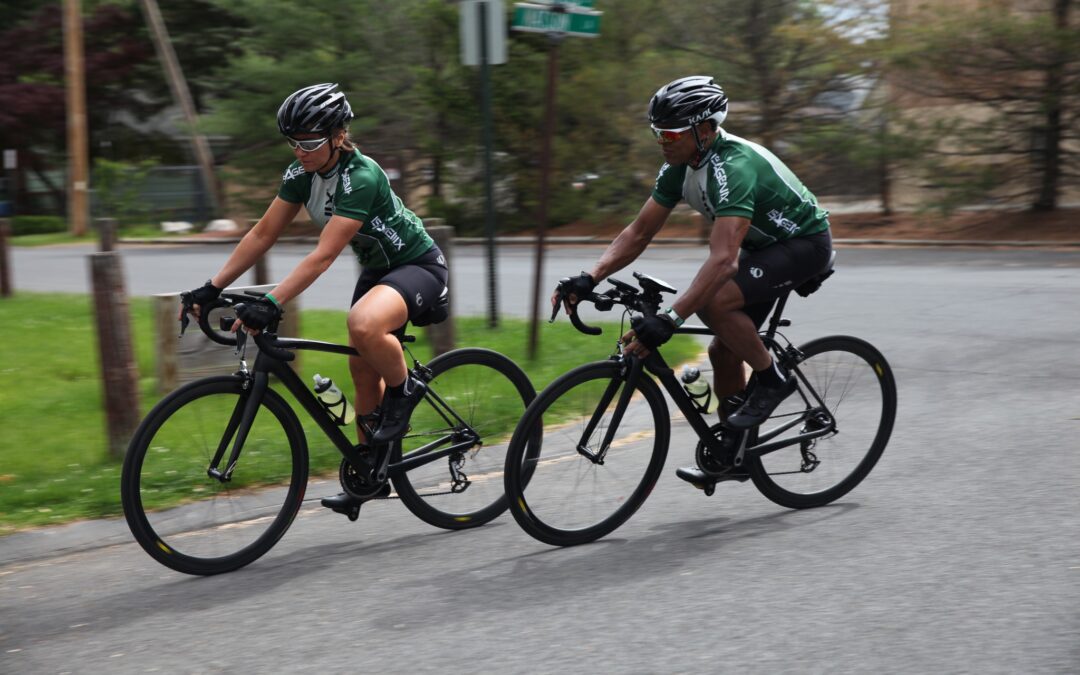
The strongest teams don’t succeed because one person carried everyone else. They succeed because people take turns carrying each other.
That’s the essence of servant leadership, and one of the most powerful lessons I’ve learned from cycling.
Almost 20 years ago, Jim introduced me to the Tour de France. We’ve watched it every year since, and along the way I discovered one of my favorite roles in professional cycling: the domestique.
At first glance, they don’t appear to be the star of the team. They aren’t usually the rider crossing the finish line with their arms raised in victory. They aren’t the one standing on the podium in the yellow jersey. They aren’t typically the name casual fans remember.
That role belongs to the GC — the General Classification rider — the cyclist targeting the overall victory of the entire Tour.
But here’s what fascinated me: The GC never wins alone.
Behind every successful GC is an entire team of riders sacrificing themselves over and over again in service of the team’s success. Riders who block the wind. Chase down breakaways. Carry supplies. Set the pace. Protect energy. Create opportunities. Pull their teammate forward. Those riders are called domestiques. The word comes from the French word for servant.
But there’s another version of the term I love even more: gregario. Rooted in the idea of being gregarious, communal, and relational. Your trusted companion. Your loyal teammate. The person who rides beside you and helps carry you forward.
The more I learn about leadership, the more I realize the best leaders often embody the principles of servant leadership. They look a lot like domestiques.
In professional cycling, domestiques are often incredibly strong riders. Strong enough to win races themselves. But instead of riding only for personal glory, they choose to use their strength in service of something bigger than themselves.
They pull when they’re strong so someone else can recover. They create space. They protect the team from the wind. They sacrifice individual recognition for collective success. And if they’ve done their job well, much of their greatest work goes unnoticed by the outside world.
We tend to celebrate the rider crossing the finish line, arms raised in victory. But the true leader is often the one who spent the entire day protecting the team from the wind.
The older I get, the more I realize leadership isn’t just about being out front. It’s about paying attention to who is struggling to keep up. It’s about slowing down just enough to allow someone else to get on your wheel. It’s about recognizing potential in people before they fully see it in themselves.
It’s about creating safety.
Building trust.
Sharing the workload.
Pulling when you’re strong.
Resting when you’re tired.
And understanding that nobody can lead every mile.
The strongest teams don’t succeed because one person carried everyone else. They succeed because people take turns carrying each other. And maybe that’s the kind of leadership more of us are hungry for right now.
Not leadership built on ego, status, titles, or performance. But servant leadership rooted in service, belief, encouragement, steadiness, and shared humanity.
The kind that quietly calls out: “Get on my wheel. I’ve got you.”
©2026 Lori Ann King
Love what you’re reading? For just $1/ a month (or even $5 or $10/month), you can help me cover my costs and keep the words coming! Contribute now.