Over the past few months, I’ve had the privilege of sitting down with employees across our organization for one-on-one conversations. More than 90 of them.
Some conversations were energizing. One person told me, “You’ve got to make time for recess.” Another said, “Leave nothing in the tank.” Others shared stories of growth, resilience, gratitude, and hope.
But there was another pattern I noticed.
The people with the hardest circumstances weren’t always the unhappiest.
And the people with the easiest circumstances weren’t always the happiest.
The difference often came down to where they placed their attention.
It’s a theme I’ve written about before in *When Leaders Leave: Choosing Love Over Fear*—the idea that what we repeatedly feed, whether fear or possibility, eventually shapes our experience.
The Resentment Gremlins
Yale professor and communication expert Alex Simon has a phrase I love: Resentment gremlins.
They’re the small frustrations we all experience. The comment that rubbed us the wrong way. The meeting that should have been an email. The coworker who doesn’t pull their weight. The friend who disappointed us. The spouse who forgot. The opportunity we didn’t get.
By themselves, these moments aren’t usually the problem. The problem is what happens when we replay them.
Again.
And again.
And again.
What starts as frustration can become resentment. And resentment can quietly become our identity. Soon, we’re no longer experiencing a difficult situation. We’re living inside it.
Building a Home There
Don’t get me wrong. We all need to vent. We all need to process. We all need trusted people who can sit with us when life feels unfair. That’s healthy.
What’s not healthy is building a permanent residence there.
Sometimes, we confuse processing with parking. One helps us move through the experience.
The other keeps us stuck in it.
What Else Are You Feeding?
The opposite is true as well. What if we gave the same amount of attention to gratitude? To creativity? To learning? To relationships? To possibility? What if we fed those things as consistently as we feed our frustrations?
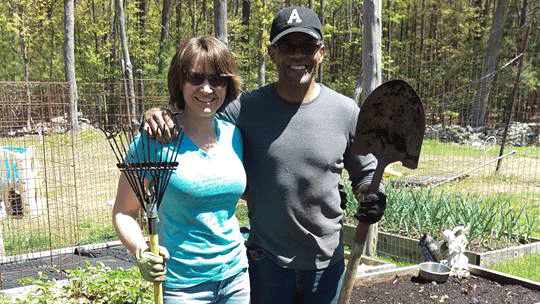
After all, most of us understand this instinctively in a garden. We water the plants we want to grow. We pull the weeds before they take over. Yet somehow, when it comes to our thoughts, we often do the opposite.
The people I know who seem most fulfilled aren’t the ones with perfect lives. They’re the ones who intentionally direct their attention toward what they want more of. They still acknowledge what’s wrong.
They just don’t stop there.
 Choosing Your Focus
What you focus on grows. Not overnight, not magically, but gradually.
Attention becomes thought. → Thought becomes habit. → Habit becomes identity. → And identity shapes the direction of our lives.
So the next time you find yourself replaying an old frustration, ask yourself: Is this helping me move forward? Or am I building a home here?
We all end up becoming something. The question is whether we’re growing the things we want, or the things we don’t. Because what we feed grows.
And what grows eventually shapes who we become.
©2026 Lori Ann King
Love what you’re reading? For just $1/ a month (or even $5 or $10/month), you can help me cover my costs and keep the words coming! Contribute now.